

Adler N and B Golany (2002). “Including Principal Component Weights to Improve Discrimination in Data Envelopment Analysis.” JORS 53(9): 985-991.
Adler N and B J. (2001). “Measuring Airport Quality from the Airlines Viewpoint: An Application of Data Envelopment Analysis.” Transport Policy 8(3): 171-181.
Adler N and B J. (2001). “Measuring Airport Quality from the Airlines Viewpoint: An Application of Data Envelopment Analysis.” Transport Policy 8(3): 171-181.
Adolphson DL, GC Cornia and LC Walters (1989). “Railroad Property Valuation Using Data Envelopment Analysis.” Interfaces 19(3): 18-26.
Adolphson DL, GC Cornia and LC Walters (1989). “Railroad Property Valuation Using Data Envelopment Analysis.” Interfaces 19(3): 18-26.
Adolphson DL, GC Cornia and LC Walters (1990). “Unified Framework for Classifying DEA Models.” Proceedings of IFORS International Conference on Operational Research: 647.
Adolphson DL, GC Cornia and LC Walters (1990). “Unified Framework for Classifying DEA Models.” Proceedings of IFORS International Conference on Operational Research: 647.
Afonso A and S Fernandes (2006). “Measuring Local Government Spending Efficiency: Evidence for the Lisbon Region.” Regional Studies 40(1): 39-53.
Afonso A and S Fernandes (2006). “Measuring Local Government Spending Efficiency: Evidence for the Lisbon Region.” Regional Studies 40(1): 39-53.
Afonso A and M St Aubyn (2005). “Non-Parametric Approaches to Education and Health Efficiency in OECD Countries.” J Appl Econ 8(2): 227-246.
Afonso A and M St Aubyn (2005). “Non-Parametric Approaches to Education and Health Efficiency in OECD Countries.” J Appl Econ 8(2): 227-246.
Abay C, B Miran and C Gunden (2004). “An Analysis of Input Use Efficiency in Tobacco Production with Respect to Sustainability: the Case Study of Turkey.” J Sustainbale Agriculture 24(3): 123-143.
Abay C, B Miran and C Gunden (2004). “An Analysis of Input Use Efficiency in Tobacco Production with Respect to Sustainability: the Case Study of Turkey.” J Sustainbale Agriculture 24(3): 123-143.
Afonso A and M St Aubyn (2006). “Cross-Country Efficiency of Secondary Education Provision: A Semi-Parametric Analysis with Non-Discretionary Inputs.” Economic Modelling 23(3): 476-491.
Afonso A and M St Aubyn (2006). “Cross-Country Efficiency of Secondary Education Provision: A Semi-Parametric Analysis with Non-Discretionary Inputs.” Economic Modelling 23(3): 476-491.
DEAzone’s blog
This is a bolg of the DEAzone.com. To post to this blog you need to register and login.
BCC
Introduced by Banker, Chames and Cooper (1984), this model measures technical efficiency as the convexity constraint ensures that the composite unit is of similar scale size as the unit being measured. The resulting efficiency is always at least equal to the one given by the CCR model, and those DMUs with the lowest input or highest output levels are rated efficient. Unlike the CCR model, the BCC model allows for variable returns to scale.
 Download
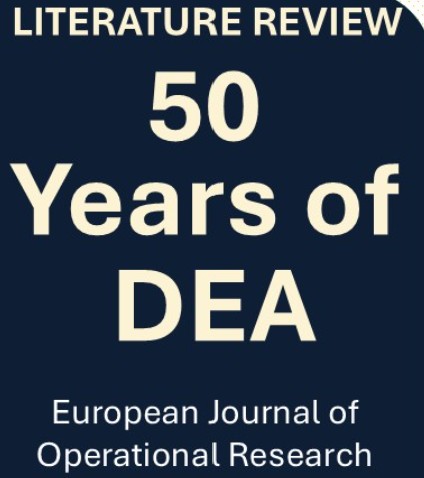
Mergoni, A. A. Emrouznejad, and K. De Witte (2025) Fifty years of Data Envelopment Analysis, European Journal of Operational Research, 326 (3): 389-412, https://doi.org/10.1016/j.ejor.2024.12.049.

DEA Workshop: Efficiency and Productivity Assessment in Higher Education and Public Services: DEA, Machine Learning, and AI, April 16-17, 2026, Aston University, UK
 DEA Course (CLICK HERE)
Dates:
Friday, June 12, 2026 – 10.00 to 17.30 (UK time)
Saturday, June 13, 2026 – 10.00 to 17.30 (UK time)
Presenters:
Professor Emmanuel Thanassoulis &
Professor Ali Emrouznejad
by Ali Emrouznejad & Rajiv Banker


William W Cooper
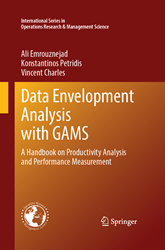
Order at Amazon – Download GAMS codes
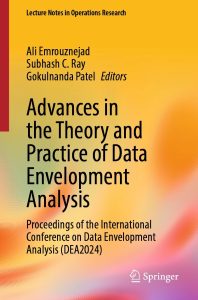 Download
 Download
Performance Improvement Management Software – PIM-DEA software
Managing Service Productivity : Uses of Frontier Efficiency Methodologies and MCDM for Improving Service Performance, Springer

Order at Amazon

Download | Recommend to Library
LinkedIn | Facebook | Twitter
 Download
Performance Measurement with Fuzzy DEA, Springer

Order at Amazon
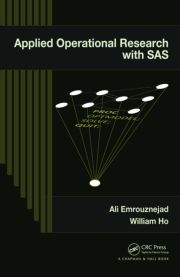
Order at Amazon
Strategic Performance Management &
Measurement Using DEA. IGI Global, USA.

Order at Amazon