Banker R., A. Emrouznejad, H. Bal, I. Alp, M. Ali Cengiz (2013), Data Envelopment Analysis and Performance Measurement, Proce

Banker R., A. Emrouznejad,  H. Bal, I. Alp, M. Ali Cengiz (2013), Data Envelopment Analysis and Performance Measurement,  Proceedings of the 11th International Conference of DEA, June 2013, Samsun, Turkey, ISBN: 978 1 85449 477 1.

Title: Data Envelopment Analysis and Performance Measurement

Subtitle (series): Proceedings of the 11th International Conference on Data Envelopment Analysis

Venue: DEA2013, June 2013, Samsun, Turkey

Edited by: Rajiv Banker, Ali Emrouznejad, Hasan Bal, Ihsan Alp, Mehmet Ali Cengiz

Date: April 2014

Number of Page: 424pp

ISBN: 978 1 85449 477 1

DOI: 10.13140/RG.2.1.3353.2966

[ Download]

Emrouznejad, A. and E. Cabanda (2014). Managing Service Productivity: Uses of Frontier Efficiency Methodologies and MCDM for Improving Service Performance. In the series of “International Series in Operations Research & Management Science”, Springer-Verlag, ISBN 978-3-662-43436-9.

Emrouznejad, A. and E. Cabanda (2014). Managing Service Productivity: Uses of Frontier Efficiency Methodologies and MCDM for Improving Service Performance. In the series of “International Series in Operations Research & Management Science”, Springer-Verlag, ISBN 978-3-662-43436-9.

The main objective of this book is to provide the necessary background to work with existing DEA models. Once the material in this book has been mastered, the reader will be able to apply DEA models to his or her problems for measuring comparative efficiency of decision-making units in any service industry.

[ Download1   or   Download2 ]

Emrouznejad, A. and M. Tavana (2014). Performance Measurement with Fuzzy Data Envelopment Analysis. In the series of “Studies in Fuzziness and Soft Computing”, Springer-Verlag, ISBN 978-3-642-41371-1.

Emrouznejad, A. and M. Tavana (2014). Performance Measurement with Fuzzy Data Envelopment Analysis. In the series of “Studies in Fuzziness and Soft Computing”, Springer-Verlag, ISBN 978-3-642-41371-1.

Since its introduction in 1978, Data Envelopment Analysis (DEA) has become one of the preeminent non-parametric methods for measuring efficiency and productivity of decision making units. DEA models are now employed routinely in areas that range from assessment of public sectors such as hospitals and healthcare systems, schools and universities to private sectors such as banks and financial institutions. The advantage of DEA is to accommodate multiple inputs and multiple outputs for measuring the relative efficiencies of a set of homogeneous decision making units (DMUs).
One limitation of the conventional DEA models is that they can only handle crisp input and output data. However, the observed values of the input and output data in real-world problems are sometimes imprecise or vague. The aim of this book is to study various fuzzy methods for dealing with the imprecise and ambiguous data in DEA. This monograph is the first in fuzzy DEA (FDEA). It contains both the authors’ research work on fuzzy DEA and other developments, especially in the last 10 years, and it is a good indication of the outgrowth of the field of fuzzy data envelopment analysis.
With the exception of some basic notions in DEA and fuzzy theory, the book is completely self-contained. Important concepts in fuzziness and measuring efficiency are carefully motivated and introduced. Specifically, we have excluded any technical material that does not contribute directly to the understanding of fuzzy or DEA. Many other excellent textbooks are available today that discuss DEA in much more technical detail than is provided here. This book is aimed at upperlevel undergraduate as well as beginning graduate students who want to learn more about fuzziness in DEA or who are pursuing research in fuzzy DEA and related areas.
The main objective of this book is to provide the necessary background to work with existing fuzzy DEA models. Once the material in this book has been mastered, the reader will be able to apply fuzzy DEA models to his or her problems for measuring comparative efficiency of decision making units with imprecise data.

[ Download1   or   Download2 ]

Masiye F., C. Mphuka and A. Emrouznejad (2014). Estimating the efficiency of healthcare facilities providing HIV/AIDS treatment in Zambia: a data envelopment approach, Chapter 4 in International Series in Operations Research & Management Science, Volume 215: 55-66 Springer-Verlag.

Masiye F., C. Mphuka and A. Emrouznejad (2014).  Estimating the efficiency of healthcare facilities providing HIV/AIDS treatment in Zambia: a data envelopment approach, Chapter 4 in International Series in Operations Research & Management Science, Volume 215: 55-66 Springer-Verlag.

 Zambia and many other countries in Sub-Saharan Africa face a key challenge of sustaining high levels of coverage of AIDS treatment under prospects of dwindling global resources for HIV/AIDS treatment. Policy debate in HIV/AIDS is increasingly paying more focus to efficiency in the use of available resources. In this chapter, we apply Data Envelopment Analysis (DEA) to estimate short term technical efficiency of 34 HIV/AIDS treatment facilities in Zambia. The data consists of input variables such as human resources, medical equipment, building space, drugs, medical supplies, and other materials used in providing HIV/AIDS treatment. Two main outputs namely, numbers of ART-years (Anti-Retroviral Therapy-years) and pre-ART-years are included in the model. Results show the mean technical efficiency score to be 83%, with great variability in efficiency scores across the facilities. Scale inefficiency is also shown to be significant. About half of the facilities were on the efficiency frontier. We also construct bootstrap confidence intervals around the efficiency scores.

[ Download1   or   Download2 ]


Emrouznejad A. and E. Cabanda (2014). Managing Service Productivity using Data Envelopment Analysis, Chapter 1 in International Series in Operations Research & Management Science, Volume 215: 1-18 Springer-Verlag.

Emrouznejad A. and E. Cabanda (2014).  Managing Service Productivity using Data Envelopment Analysis, Chapter 1 in International Series in Operations Research & Management Science, Volume 215: 1-18 Springer-Verlag.

This chapter provides the theoretical foundation and background on data envelopment analysis (DEA) method. We first introduce the basic DEA models. The balance of this chapter focuses on evidences showing DEA has been extensively applied for measuring efficiency and productivity of services including financial services (banking, insurance, securities, and fund management), professional services, health services, education services, environmental and public services, energy services, logistics, tourism, information technology, telecommunications, transport, distribution, audio-visual, media, entertainment, cultural and other business services. Finally, we provide information on the use of Performance Improvement Management Software (PIM-DEA). A free limited version of this software and downloading procedure is also included in this chapter.

 [ Download1   or   Download2 ]

Emrouznejad, A., M. Tavana, A. Hatami-Marbini (2014) “The State of the Art in Fuzzy Data Envelopment Analysis”, in “Performance Measurement with Fuzzy Data Envelopment Analysis” published in Studies in Fuzziness and Soft Computing 309: 1:48, Springer-Verlag

Emrouznejad, A., M. Tavana, A. Hatami-Marbini (2014) “The State of the Art in Fuzzy Data Envelopment Analysis”, in “Performance Measurement with Fuzzy Data Envelopment Analysis” published in Studies in Fuzziness and Soft Computing 309: 1:48, Springer-Verlag.

Data envelopment analysis (DEA) is a methodology for measuring the relative efficiencies of a set of decision making units (DMUs) that use multiple inputs to produce multiple outputs. Crisp input and output data are fundamentally indispensable in conventional DEA. However, the observed values of the input and output data in real-world problems are sometimes imprecise or vague. Many researchers have proposed various fuzzy methods for dealing with the imprecise and ambiguous data in DEA. This chapter provides a taxonomy and review of the fuzzy DEA (FDEA) methods. We present a classification scheme with six categories, namely, the tolerance approach, the a-level based approach, the fuzzy ranking approach, the possibility approach, the fuzzy arithmetic, and the fuzzy random/type-2 fuzzy set. We discuss each classification scheme and group the FDEA papers published in the literature over the past 30 years.

[ Download1   or   Download2 ]

Privatization, Corporatization and Performance of the Service Sector, Sweden, August 11-12, 2016

Call for Papers
In most countries the public sector has grown to replace the declining agriculture and industry sectors. The public sector is the largest relative to the size of the economies, total consumption and employment. In the recent three decades the public service sector has gone through a series of radical changes in the form of privatization and corporatization. This is a part of the large waves of privatization in Russia, China, India and some Latin American countries and the general waves of privatization in the areas of ICT, water and electric utilities, public transportation, education and health around the world. A comparison of the performance of the sub-sectors before and after the reforms is desired to be conducted for different services at different levels. The reforms have had strong implications for the welfare system, efficiency in provision of services, and the service providers. The reforms have had strong implications for the development and growth of the private service sector. However, little is known about the core objectives of the changes, namely improved efficiency in service provisions of the target services. This of course does not exclude evaluation of reforms in agriculture and manufacturing sectors, as well as other areas such as development aid and sustainable growth and development. Given the comprehensive service sector reforms and the necessity to evaluate their outcomes, this conference will help in filling the existing evaluation gap effectively.

Jönköping International Business School invites submissions of completed but unpublished papers that focus on an evaluation of the effects of privatization and corporatization on the performance of the service sector in developed, emerging and developing countries. Theoretical, methodological and empirical research and policy or practice oriented papers are welcome provided that they are based on a sound conceptual foundation with a well-thought out method.

Applied and practice oriented manuscripts can focus on groups of countries or individual economies, the service sector or public and private services. Priority will be given to service sector studies, but papers on manufacturing and agriculture sectors are also welcome, provided they discuss the implications of the research findings for the service sector.

Submission of complete papers are made online at: http://www.ju.se/servicesectorconference/ before 15 May 2016. Please provide abstract of less than 200 words, a minimum of 3 keywords, affiliation and e-mail address details on the cover page. Additional information is found at the conference website: http://www.ju.se/servicesectorconference/

A selection of high quality papers presented at the conference will be considered for publication in special issue(s) of leading academic journal(s) in relevant fields and edited book volume(s) published by Springer book series. The following conference fees are applied: Academics 3,500 SEK (approximately €350), PhD students 2,500 SEK (approximately €250), Non-Academics 4,500 SEK (approximately €450). Participants are expected to cover their travelling and accommodation expenses. For information about travelling, accommodation and registration please visit http://www.ju.se/servicesectorconference/

Invited Speakers:
Giannis Karagiannis, Macedonia University, Greece
Subal C. Kumbhakar, University of Binghamton, USA
Timo Kuosmanen, Aalto University, Finland
John Whalley, Western University, Canada

Deadlines:
Submission of full papers (preferably 6,000-10,000 words, typed, singe spaced in Times New Roman, 12 points with a 3 cm margin all around, in PDF format): 15 May 2016
Decision on submission: 30 May 2016
Deadline for registration: 20 June 2016
Conference days: 11-12 August 2016
Submission of revised papers for publication: 30 September 2016

Organizing Committee:
Almas Heshmati, Jönköping International Business School, Jönköping University (Chair).
Mikaela Backman, Jönköping International Business School, Jönköping University.
Johan Klaesson, Jönköping International Business School, Jönköping University.
Johan Eklund, Swedish Entrepreneurship Forum, Stockholm.
Andre Petzold, Destination Jönköping, Jönköping City.
Linda Bergqvist, Jönköping University.

Service Innovation and Data Mining, 4-6 April 2016, CENTRUM Católica, Business School, Perú

CENTRUM Research’s Industry Outreach Management Development Program on “Service Innovation and Data Mining”

It is time to become a Certified New Service Developer. Although executives are constantly directing their efforts to new service development and service innovation, little is actually known about how new services are actually developed. Nevertheless, one thing is for sure: the core of new service development remains the understanding of the demands of the customers. In this context, the advantages of new data mining techniques and technologies to acquire information of the customers’ needs and demands can translate into an increase of the success rate of service innovation.

Contents:

  • Introduction to new service development.
  • Prototyping service innovation.
  • Various tools to measure the services.
  • Pros and cons of new service development (Private vs. Public).
  • Mining tools and association rules for mining.

Expositors

Charles Vincent, MSc (Statistics), PhD (OR), PDRF (OM), is currently with CENTRUM Católica Graduate Business School, PUCP, Lima, Peru, as the Director of CENTRUM Research and as a Distinguished Research Professor. He is an Honorary Professor of Maastricht School of Management, The Netherlands. He is also a post-doctoral research fellow from NUS, Singapore. He is a certified Six Sigma Black Belt and a Sig Sigma Master Black Belt. He holds Executive Certificates from the MIT Sloan School of Management and Harvard Business School. He has almost 17 years of teaching, research, and consultancy experience in various countries, including India, Malaysia, Peru, Singapore, and the USA, in the fields of applied quantitative analytics. He has published over 80 research papers. He is a recipient of many international academic honors and awards. He won the 2013 award in the category of The Most Innovative Study from the Premio PODER to Peru’s Think Tank of the Year, the 2013 award in Summer Grants (competition) from the Emerging Markets Institute (EMI) of Johnson Cornell University, USA (along with Nagesh Gavirneni) and also the best research paper award (2006) in Finance from the Centre for Financial Excellence, KLS’ IMER, Belgaum, India. Additionally, in 2012 he received the Best Paper Award from the ESIC Market Best Papers Awards CLADEA 2012. For three consecutive years, 2010-12, he was the recipient of the Highly Commended Award of the Emerald/CLADEA Latin American Management Research Fund Award and for five consecutive years, 2010-14, he was the recipient of CENTRUM’s annual research contribution award. He has published books with Pearson Prentice Hall and Cambridge Scholars Publishing, UK.

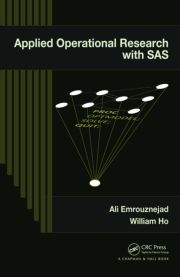
Ali Emrouznejad is a professor of Business Analytics in Operations and Information Management Group at Aston Business School, UK. His areas of research interest include performance measurement and management as well as data mining and big data. Dr. Emrouznejad is editor or associate editor in several respected Journals including Annals of Operations Research, Socio-Economic Planning Sciences, and IMA Journal of Management Mathematics. He has published over 80 articles in top ranked journals and several books including “Applied Operational Research with SAS” (CRC Press), “Performance Measurement with Fuzzy DEA” (Springer), “Managing Service Productivity” (Springer), and “Handbook of Research on Strategic Performance Management and Measurement Using DEA” (IGI Global). He is also co-founder of Performance Improvement Management Software (PIM-DEA), see http://www.DEAzone.com.

Who should attend? This Management Development Program is aimed at middle and senior-level executives in any industry who are involved directly or indirectly in new service development and data mining and who wish to better understand their customers and adapt to the fast-changing markets.

MDP Materials: Lecture notes will be provided in both English and Spanish.

Language of Instruction: English.
Venue: Sheraton 4 Points, Calle Alcanfores 290, Miraflores, Lima 18, Peru.

Registration Fee: S/. 1500 (Group discount available)

Program Details: For details, kindly contact vcharles@pucp.pe / jcervan@pucp.pe /amoralesa@pucp.edu.pe

Download the program

Workshop on Education Economics, March 23-24, 2016, The Netherlands

This workshop seeks to explore the use of economic and econometric techniques to study educational issues. We invite the submission of original research from colleagues working in the area.

We especially welcome research which applies identification strategies as difference-in-differences, instrumental variables, regression discontinuity, static and dynamic choice modelling, non-parametric frontier models and structural equations. Both macro and micro-economic topics are of interest to this workshop.

The workshop is organized by Maastricht University, Top Institute for Evidence Based Education Research (TIER), the Netherlands and the research center ‘Leuven Economics of Education Research’ (LEER) of the Faculty of Economics and Business KU Leuven.
Deadline Call for Papers: December 22, 2015

More information: www.tierweb.nl
Abstract submissions to: carla.lenssen@maastrichtuniversity.nl


One day DEA course, 24th June 2016

Performance Management with Data Envelopment Analysis

24th July 2016, OR Society, Birmingham, UK

This course is ideal for anyone interested in assessing the relative performance of organisational units – for example different regional offices, bank branches, sales outlets hospitals or schools.

You’ll get an introduction to the recent developments in DEA including weights restrictions, assessment under variables returns to scale and target setting and undertake illustrative assessments using advanced features of the Performance Improvement Management Software (PIM-DEA)

  • Learn about new methods in efficiency and productivity
  • Understand principles behind the non-parametric performance measurement
  • Get hands-on experience of the PIM-DEA software from the developers
  • See how to improve the efficiency and productivity of decision making
  • See how to apply DEA techniques to your own workplace

Course tutors: Professor Ali Emrouznejad and Professor Emmanuel Thanassoulis
Course date:  24th June 2015
Conference Venue: The OR Society, Birmingham, B1 2RX, UK
Deadline for registration: 5st May 2016
Further information:  http://tiny.cc/DEAJuly2015Booking
Contact email:  jennie.phelps@theorsociety.com
Telephone:  +44 (0)121 233 9300
Booking & reservation: http://tiny.cc/DEAJuly2015Booking or contact  a.emrouznejad@aston.ac.uk